

This is a follow-up
to last week’s post. Occasionally I receive comments on social
media that point me to academic analysis that I wasn’t aware of,
particularly on an issue that is not macroeconomics. Last week was
one of these occasions (thanks to @yusufimaadkhan.com), and it allows
me to expand on what I wrote to give it wider scope.
As a brief reminder,
I argued last week that support for far right populist parties
depended to a significant extent on the attitudes of political
elites, and in particular leaders of mainstream parties. If these
elites ostracise far right or racist views, then this discourages
voters from voting for far right parties. A clear example of that in
the UK was Prime Minister Edward Heath sacking Enoch Powell after his
‘rivers of blood’ speech. In contrast, if mainstream political
leaders attempt to attract potential far right voters by adopting far
right rhetoric on issues that concern those voters (immigration,
asylum, human rights), this not only destroys any social taboos on
voting for far right parties but actively encourages such votes. An
example of this would be the recent behaviour of first the
Conservative party and more recently the Labour party in the UK.
This idea has strong
similarities to the thesis set out in a book
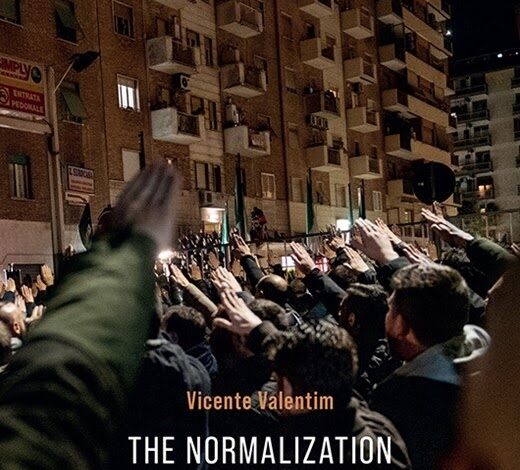
published in 2024 by Vicente
Valentim, who is Assistant Professor at IE University
in Spain, called “The Normalization of the Radical Right: A Norms
Theory of Political Supply and Demand” and published by Oxford
University Press.

The book proposes a theory based on social norms, where growing
radical-right behavior is driven by individuals who already held
radical-right views, but who previously did not act on them because
they thought that they were socially unacceptable.
A key implication of this theory and my previous post was that the
rise of right wing populism should not be seen as a surprise, but
instead represents a return to a more natural state of affairs where
a significant section of the population holds pretty socially
conservative (including xenophobic or racist) views and votes
accordingly. The unusual period is not today but the fifty odd
years after WWII, where this vote was suppressed or diverted because
of strong social norms against anything that appeared to be racist
behaviour. Let me quote from an interview
Valentim recently gave:
“the argument in the book is that many voters already hold
radical-right views before radical-right parties and politicians
first become successful. However, they typically hide them to avoid
social repercussions.”
An obvious reason
why this strong social norm existed after WWII was that the war had
been fought and won against right wing populist (in particular
fascist) regimes, and the horrors that these regimes can create
became well known. I
have suggested that part of the reason that right wing
populist parties have become more socially acceptable for some is
simply the distance in time between WWII and today.
Valentim’s main
account of the rise in radical right parties is based on political
entrepreneurs.
“The fact that [voters] do not show these views lead politicians to
underestimate the electoral viability of running for politics on a
radical-right platform. This leaves radical-right parties with less
skilled leaders who are unable to mobilize even voters with privately
held radical-right preferences to go out and vote for them.”
He calls this the ‘latency’ phase. It is followed by an
‘activation’ phase, when far right leaders do manage to mobilise
far right votes, and a ‘surfacing’ phase where because
“radical-right parties and politicians become successful and enter
political institutions [this] makes individuals perceive that their
positions are more socially acceptable than anticipated. This has two
implications. First, at the demand-side level, it means that voters,
who already held radical-right views but did not show them in public,
become more comfortable expressing these radical-right views. …
Second, at the supply-side level, politicians learn that one can be
electorally successful while espousing radical-right views.”
Valentim identifies triggers that can begin the activation stage. In
Germany, for example, he points to the 2015 refugee crisis, although
in my view German unification must
also be important. In the interview Valentim points to
Obama’s presidency as a trigger for the US, but my own view is that
in both the US and UK the growing unpopularity of neoliberalism
played an important supply side role in motivating right wing
politicians to move to social rather than economic issues. I’m also
not sure that the ‘latency’ phase can be put down to the
ignorance of political entrepreneurs. To go back to the Heath/Powell
moment in the UK, it was quite clear that Powell had plenty of
popular support. Rather it was the social values held by mainstream
political leaders and many in the media that kept Powell’s views
outside the Overton window of acceptable public discourse.
While our views on what sustains social norms against very socially
conservative views and what leads to their breakdown may differ, we
agree on how the behaviour of mainstream politicians can magnify that
breakdown. To quote from the interview again:
“mainstream actors have a crucial role to play in processes of
normalization. After
radical-right politicians become successful, other politicians often
move closer to their position (what
is often called accommodation). This move can have important
consequences in further normalizing radical-right views, because it
makes those views seem even more widely accepted.”
Can social norms against racist or xenophobic views, or more
generally against the demonisation of minorities, be replaced once
lost? Valentim thinks not, although he does point to the role of
education in changing people’s views. I share this pessimism, in
part because of the role that very
wealthy individuals inside and outside the media are
playing in supporting the far right. After all, the social norm
against these views has not normally broken down because the majority
of voters don’t approve of that norm, but because political
elites have allowed that social norm to be broken.
While it is depressing to acknowledge the idea that it is normal for
far right populist parties to have large vote shares once social
norms against very socially conservative views have broken down, it
does suggest that trying to find demand side explanations for the
growing popularity of right wing populism may be pointless. For
example, while it may be very desirable to reduce regional and other
divergences in economic prosperity, and this will help stop right
wing populists winning elections, doing so is unlikely to return us
to a world where the populist far right is an insignificant political
force. More generally, it may be pointless to look for economic or
cultural demand-side factors that largely explain the growing appeal of right
wing populism.
Source link


