
Education
-
How To Connect Schools And Communities
by Terry Heick It’s possible that there is no time in the history of education that our systems of educating have been so out of touch with the communities. Growing populations, shifting communities, and increasingly inwardly-focused schools all play a role. In light of the access of modern technology, social media, and new learning models that reconfigure the time and…
Read More » -

The Role of Artificial Intelligence in Online Language Learning –
AI is quickly becoming a powerful change in online language learning (i.e., through eLearning), and it can significantly change how the material is delivered and how well learning systems work. When AI is added to eLearning platforms, they become smart tools that customize learning experiences to meet students’ needs and run fun and useful training classes. Let’s take a quick…
Read More » -

Teaching Students To See Quality
by Terry Heick Quality—you know what it is, yet you don’t know what it is. But that’s self-contradictory. But some things are better than others, that is, they have more quality. But when you try to say what the quality is, apart from the things that have it, it all goes poof! There’s nothing to talk about. But if you…
Read More » -

Questioning In The Classroom: An Updated Guide
by Terry Heick If the ultimate goal of education is for students to be able to answer questions effectively, then focusing on content and response strategies makes sense. If the ultimate goal of education is to teach students to think, then focusing on how we can help students ask better questions themselves might make sense, no? Why Questions Are More Important…
Read More » -

The Difference Between Constructivism And Constructionism –
The Difference Between Constructivism And Constructionism by Terry Heick While working on the learning theory visual overview, I realized I couldn’t clearly explain the difference between constructivism and constructionism. So I did a little research and initially didn’t find much to ease my confusion. The Difference Between Constructivism And Constructionism Constructivism is–more or less–the same thing. So what’s the difference…
Read More » -

The Simplest Way To Change Education
by Terry Heick Having gone on for decades now, discussions around the idea of ed reform are a bit tired. They seem pointless. Exhausting. A waste of time and creative bandwidth. Bottom-up change is exhausting and top-down change is exhausting for entirely different reasons. Rather than state or federal policy, make schools and communities accountable to one another. This would…
Read More » -
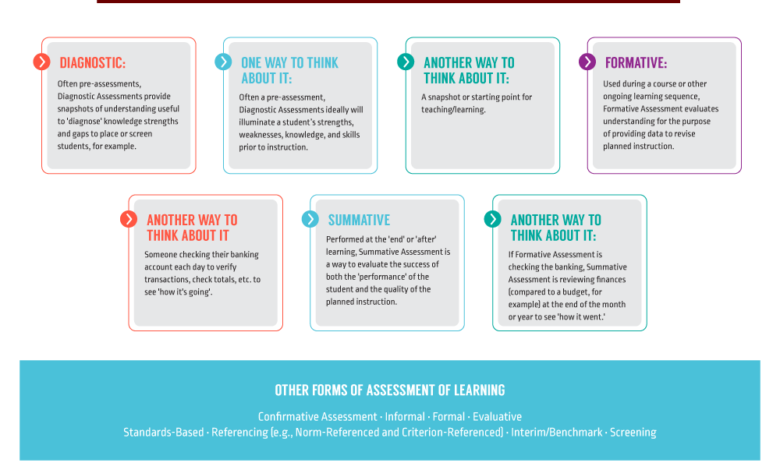
6 Types Of Assessment Of Learning
by TeachThought Staff What are the types of assessment for learning? And more importantly, when should you use which? If curriculum is the what of teaching and learning models are the how, assessment is the puzzled ‘Hmmmm’–as in, I assumed this and this about student learning, but after giving this assessment, well….’Hmmmmm.’ In The Difference Between Assessment Of Learning And…
Read More » -
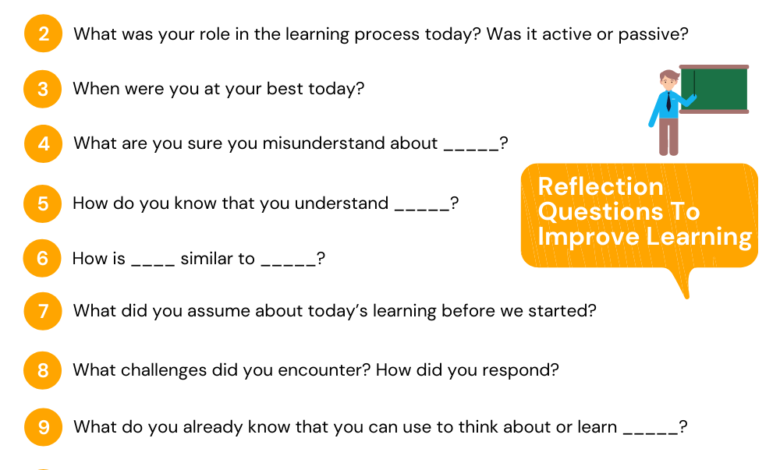
50 Learning Reflection Questions For Students –
by Terry Heick A few years ago, I wrote about Types of Learning Journals and reflection was a part of this thinking. I’ve also shared a small collection of basic reflective questions in the past that could be used as a tweet or other social media post. Now, for an updated post, I’ve collected many of these questions into a…
Read More » -

The Influence of Socioeconomic Status on Learning –
contributed by Michael Mirra Abstract Diversity has been at the forefront of educational discussions over the last few years. When we think about having a diverse classroom we think of ethnicity, race, gender, nationality, religion, and sexual orientation. It is easy for us to forget about socioeconomic status. This paper explores the impact socioeconomic status has on student learning in…
Read More » -

Technology Tools For Interactive Learning –
contributed by Edelyn Bontuyan What makes traditional learning click? In-person learning. As a teacher, your students look up to you to impart knowledge in a format and manner they can absorb fast and easy. How do you achieve that? You conduct Q&A sessions, set up discussions, conduct practicals, lead peer teaching sessions, and more. But here comes a question you…
Read More »