
Education
-
Richard Feynman On Knowing Versus Understanding –
Richard Feynman On Knowing Versus Understanding by TeachThought Staff Who is Richard Feynman? Richard Feynman, born in 1918, was a theoretical physicist whose work in quantum mechanics earned him the Nobel Prize in Physics in 1965. According to nobelprize.org, Feynman obtained his B.Sc. in 1939 at the Massachusetts Institute of Technology and studied “at Princeton University, where he obtained his…
Read More » -

An Example Of Rigor-Based Differentiation –
contributed by Barbara R. Blackburn Differentiation is a popular concept in today’s schools. After all, it makes sense. We’d all love to provide instruction tailored to every student’s needs. However, intentionally or accidentally, many teachers simply lower the rigor for struggling students. When we do that regularly, students always stay behind. In some cases, they are never even allowed to…
Read More » -

What Is Mistake Literacy? The Research Of Learning Through Failure –
contributed by Dr. Zak Cohen In 2009, President Obama spoke to a group of students at Wakefield High School in Arlington, Virginia. As someone who had readily and unabashedly admitted to his mistakes as a youth and how these missteps informed the adult he had become, he humbly but stridently impressed upon his audience the importance of learning from one’s…
Read More » -

Knowledge Domains For The 21st Century Student
by TeachThought Staff Thinking in the 21st century is just different. That doesn’t mean we’re all suddenly omnipotent cyborgs, nor do we all become mindless social media addicts who spend our cognitive might tapping, swiping, and drooling on our smartphone and tablet screens. But just as the 19th century presented unique challenges to information processing compared to the 18th or…
Read More » -
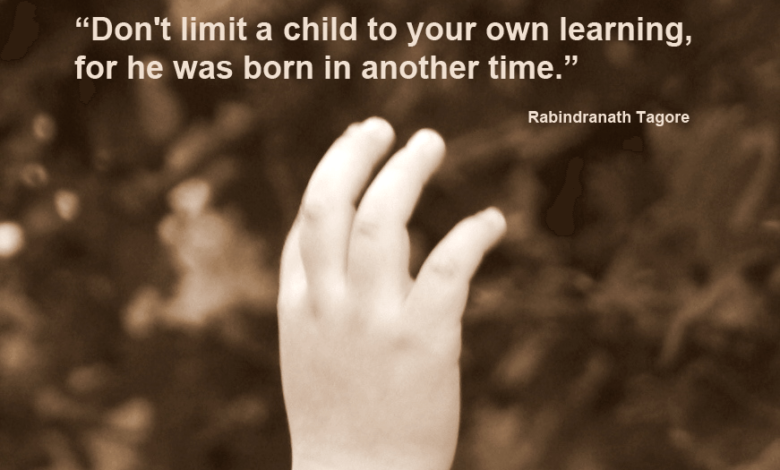
A Powerful, One-Sentence Argument For Progressive Learning
by TeachThought Staff Do not limit a child to your own learning, for they were born for another time. R Tagore While each generation is unique, possessing its own challenges, opportunities, and cultural contexts, the methods of teaching and the knowledge passed down often reflect the values and norms of previous eras. This gap between the present generation’s needs and…
Read More » -
On The Danger Of Popular Ideas In Education –
by Terrell Heick More than once, I’ve seen Bloom’s Taxonomy called a ‘fad.’ This can be lumped in with Charlotte Danielson’s DOK framework and Learning Styles, eLearning, Blended Learning, MOOCs, Common Core academic standards, and a few dozen other practices, ideas, and programs–each as a fad. Something that, for a while, is ‘popular.’ And sometimes, this is true. Oxford defines…
Read More » -
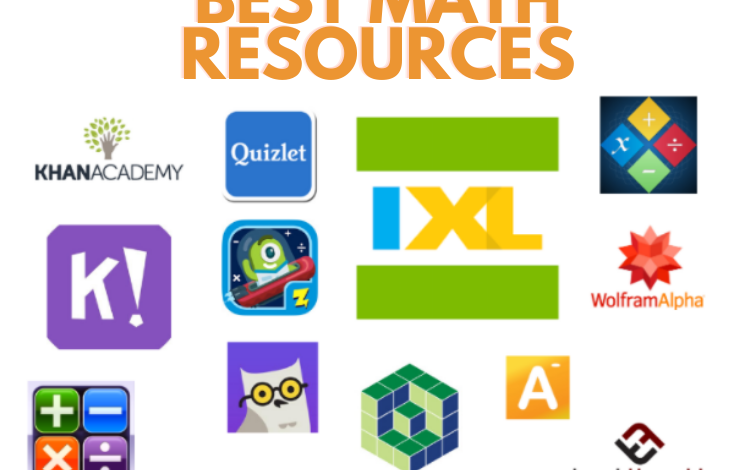
Learning Math? 25 Of The Best Math Resources
by TeachThought Staff What are the best math resources? Because of the skill-based nature of mathematics in general, math resources pair especially well with digital tools like apps and websites. On these kinds of platforms, accounts can be created, progress can be visualized, mastery can be documented, complexity can be adjusted to individual needs, and achievements can even be given…
Read More » -

What Is Cognitive Constructivism? –
Learning theory isn’t generally high on the list of practicing teachers. For starters, teachers are busy poring over the classic–or emerging–learning theories that can inform their teaching on a day-to-day basis. Secondly, much of K-12 pedagogy in the United States is subject to the constraints of academic standards, district pacing guides, curriculum maps, etc. Accordingly, learning theory is more commonly…
Read More » -

Resources For Teaching With Bloom’s Taxonomy
6.5k Views FacebookTwitterSubscribe Bloom’s Taxonomy was a remarkable attempt to create a system of learning that focuses on how people learn and organize content around those natural aptitudes. Created by Benjamin Bloom in 1956, Bloom’s Taxonomy offered a method and structure to think about thinking. Below, we’ve collected a list of blog posts, apps, tools, videos, and strategies to help educators…
Read More » -

What Role Does Empathy Play In Learning?
by Terry Heick So much talk about empathy in education recently. Why? What’s the big idea? The role of empathy in learning has to do with the flow of both information and creativity. A dialogic interaction with the world around us requires us to understand ourselves by understanding the needs and conditions of those around us. It also requires extended…
Read More »