
Education
-
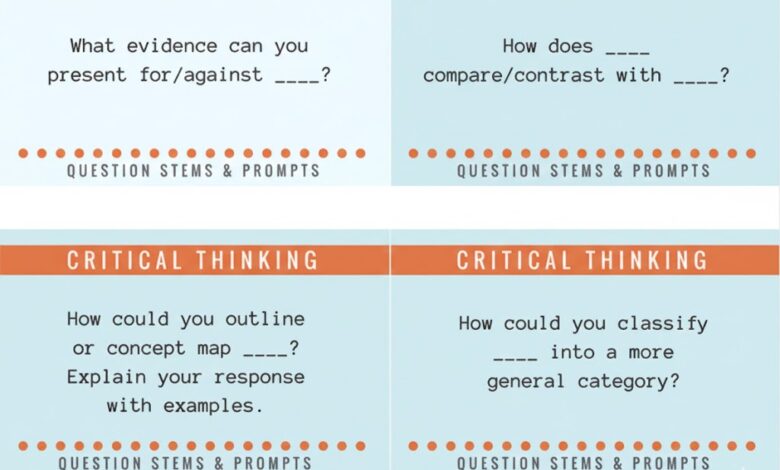
26 Sentence Stems For Higher-Level Conversation In The Classroom
by Terry Heick Meaningful conversation can make learning more personal, immediate, and emotional. During meaningful conversations, students are forced to be accountable for their positions, to listen, to analyze opposing perspectives, and to adapt their thinking on the fly. There are many popular strategies for these kinds of conversations, each with slightly unique rules and applications. Among them are Socrative…
Read More » -
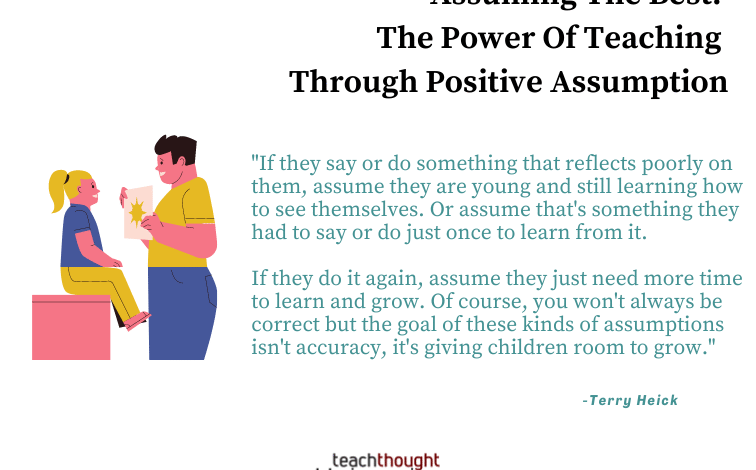
Assuming The Best: The Power Of Teaching Through Positive Assumption
by Terry Heick Always assume the best in students; at worst, assume there’s more to know. If they fail, assume they tried and want another chance. Assume they weren’t aware of what they weren’t aware of or that they don’t understand the scale or effects of the failure. If they break a rule, assume they weren’t aware of the rule.…
Read More » -
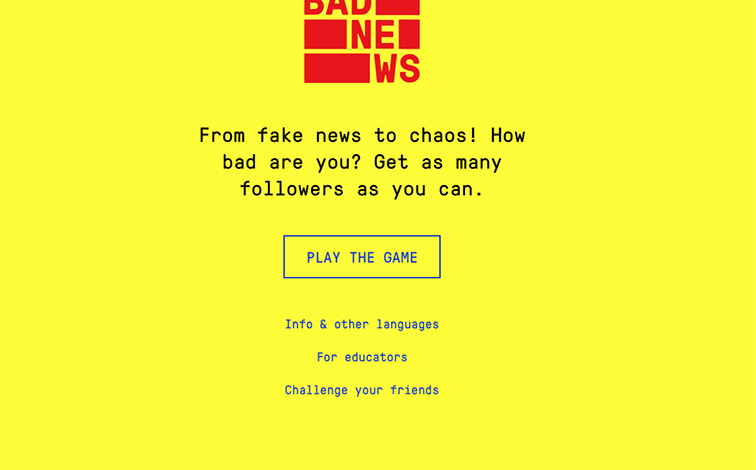
Bad News: A Game About The ‘Success’ Of Fake News
by Terry Heick Want to help students learn to think critically about ‘fake news’? A simple, browser-based game could help. What is Bad News? Bad News is a simple tool to help students understand ‘fake news,’ the (modern?) phenomenon of misinformation and ‘content as news’ propagated, at least in part, by the rise of digital and social media. (You can…
Read More » -
What Happens When Teachers Connect
by Terry Heick Digital and social media have replaced the landscape for education. This isn’t a case of mere impact or transformation–it’s all different now. Everything–the tools, the audiences, the access to content, the data, the opportunity. And this is a displacing and replacing that will only accelerate as re-conceptualizing of the craft of teaching in light of emerging technologies and…
Read More » -
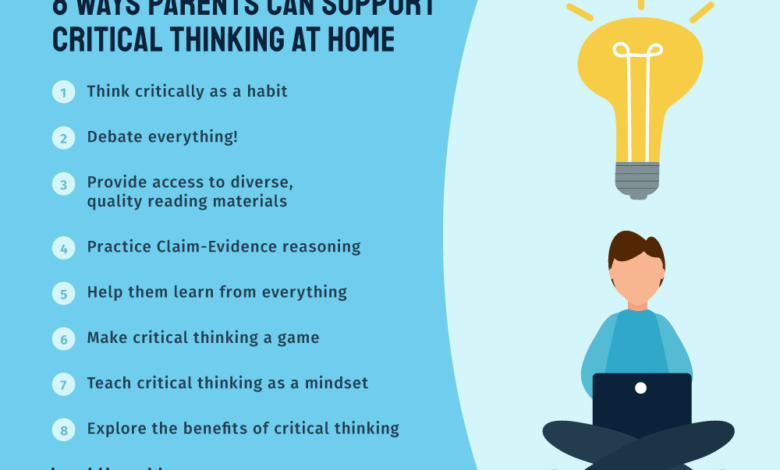
8 Ways Parents Can Support Critical Thinking At Home
contributed by Lee Caroll, PhD and updated by TeachThought Staff Research agrees that the strongest students emerge from homes supportive in the learning process, and below we’ve listed a few ways parents can support students at home. In 8 Science-Based Strategies For Critical Thinking, we looked at ways we can use ‘thinking like a scientist’ to improve our own critical thinking skills. Below,…
Read More » -
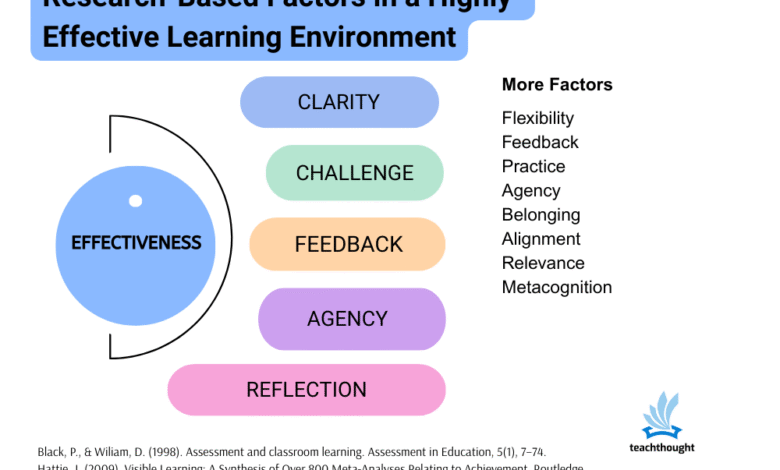
Research-Based Factors Of A Highly Effective Learning Environment [Updated]
Wherever we are, we’d all like to think our classrooms are ‘intellectually active’ places. Progressive learning environments. Highly effective and conducive to student-centered learning. The reality is, there is no single answer because teaching and learning are awkward to consider as single events or individual ‘things.’ So we put together one take on the characteristics of a highly effective classroom…
Read More » -
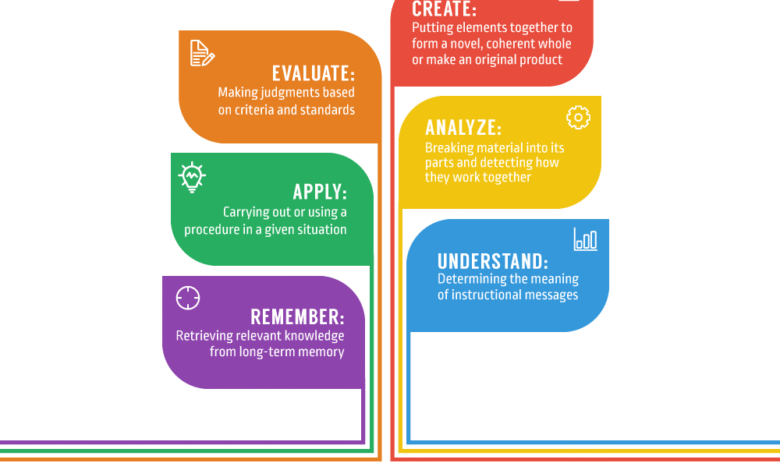
What Is Bloom’s Revised Taxonomy?
Bloom’s Revised Taxonomy: cognitive process dimension Bloom’s Revised Taxonomy changed the original 1956 framework by updating the level names to verbs, reordering the top levels, and adding a second dimension for types of knowledge. The revision clarifies what students do cognitively and how those actions interact with factual, conceptual, procedural, and metacognitive knowledge. How Bloom’s Taxonomy Changed Nouns to verbs:…
Read More » -
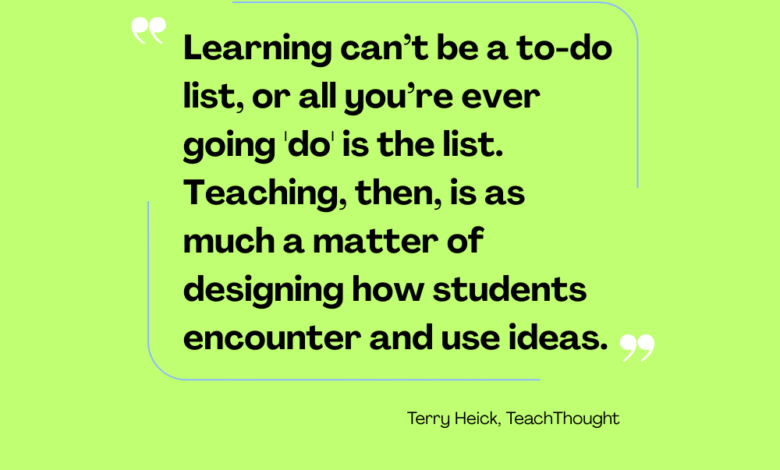
Why What Students Don’t Know Is More Important Than What They Do
by Terry Heick My biggest takeaway from college was learning what I didn’t know. So many passionate, crazy-smart people–teachers and students–that modeled learning and curiosity as I hadn’t seen it before. Entire courses on single ideas I wouldn’t have given a second thought without someone pointing it out for me. It was mind-boggling. In high school, my academic interactions were…
Read More » -
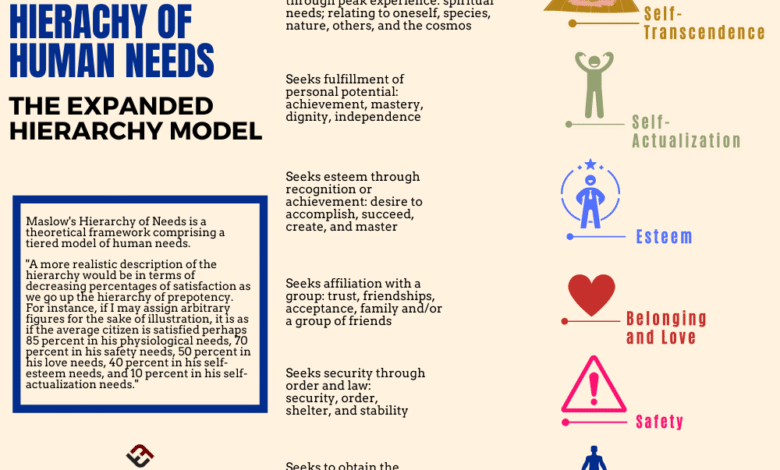
What Is Maslow’s Hierarchy Of Needs?
The Definition Of Maslow’s Hierarchy Of Needs by TeachThought Staff Maslow’s Hierarchy of Needs is a theoretical framework comprising a tiered model of human needs, often depicted as hierarchical levels within a pyramid. The framework was developed by Abraham Maslow in his 1943 paper, ‘A Theory of Human Motivation’ in the journal Psychological Review and revised multiple times (thus resulting in multiple…
Read More » -
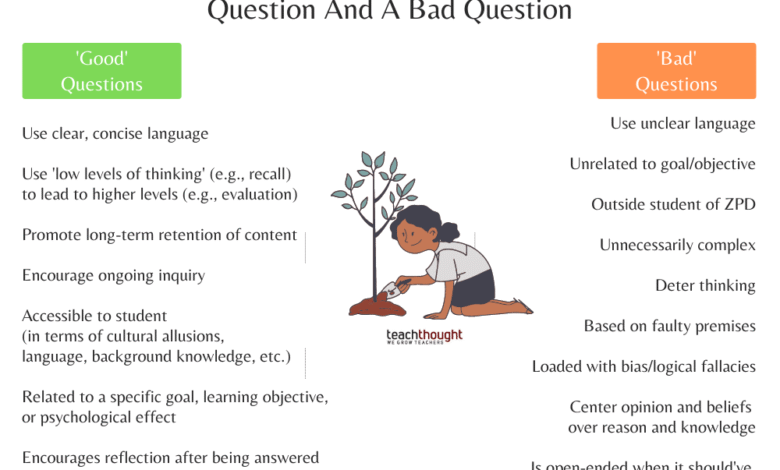
The Difference Between A Good Question And A Bad Question – TeachThought
November 16, 2025 | Updated November 17, 2025 What’s the definition of a ‘good question’? We often say to one another, ‘That’s a good question,’ by which we usually mean, ‘I don’t know the answer’ or ‘I had not yet thought to ask that but it seems worth asking.’ We can begin to define a good question by taking…
Read More »