
Education
-
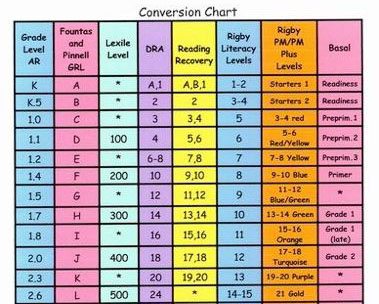
A Conversion Chart For Reading Level Measurement Tools
A Conversion Chart For Reading Level Measurement Tools by TeachThought Staff If you’ve used AR (Accelerated Reader) as a reading motivation tool to set goals and track progress, you’re undoubtedly aware of its ability to assess general reading levels as well. The problem is, measuring reading level is really outside of its sweet spot as a literacy tool, with better…
Read More » -
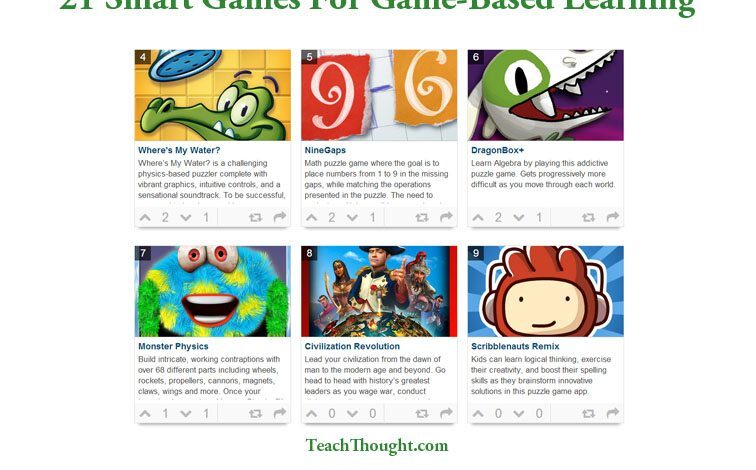
21 Smart Games For Game-Based Learning
by TeachThought Staff There is a difference between gamification and game-based learning, and this post focuses on the latter. Essentially, game-based learning means to learn through games. Learn what and how–and through what games–is the less straight-forward part. There is seemingly a disconnect between what students learn while playing games (e.g., problem-solving, visual-spatial thinking, collaboration, resource management) and the pure…
Read More » -

10 Video Games To Get Started With Game-Based Learning
by TeachThought Staff In The Difference Between Between Gamification and Game-Based Learning, we learned the difference between the two. “Gamification is first and foremost about encouragement mechanics and the system that promotes them, while game-based learning is first and foremost about the game and its cognitive residue (whether from the game’s content, or academic content). One can use the other.”…
Read More » -

126 Digital Learning Verbs Based on Bloom’s Taxonomy – TeachThought
by TeachThought Staff At TeachThought, we’re interested supporters of any learning taxonomy. (We even created our own, the TeachThought Learning Taxonomy.) Learning taxonomies help us think about how learning happens, highlighting that there are many ways to frame thinking. Bloom’s Digital Taxonomy Verbs adapt Bloom’s original cognitive framework for digital learning, helping K-12 teachers integrate technology while building essential thinking skills.…
Read More » -
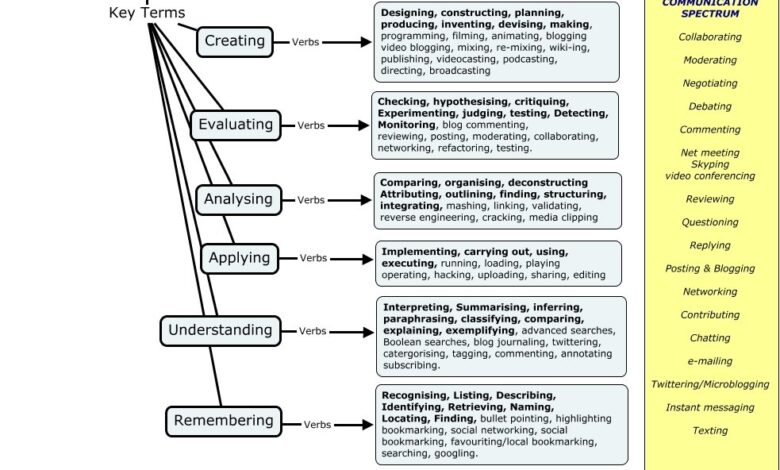
A Bloom’s Digital Taxonomy For Evaluating Digital Tasks
by TeachThought Staff At TeachThought, we’ve described Bloom’s Taxonomy as “a hierarchical ordering of cognitive skills that can, among countless other uses, help teachers teach and students learn.” Whether you’re designing instruction, evaluating an assessment, or observing a classroom, Bloom’s remains a powerful tool for understanding how thinking happens—and how we can better support it through intentional lesson design. Integrating AI…
Read More » -

10 Student Engagement Strategies That Empower Learners – TeachThought
by Terry Heick Agreeing on how to best establish what a learner understands isn’t simple — if for no other reason then understanding itself isn’t simple. The difference between gamification and game-based learning is important: the former uses encouragement mechanics to promote engagement, while the latter uses video games as core sources of learning material or cognitive action) is one response. By…
Read More » -

Shifting Focus From Ideas To The Effects Of Those Ideas
by Terry Heick It’s not the thinking behind an idea that should bother us, but rather the effect of the idea. #edtech. Content-based academic standards. PLCs. Video streaming. Use of data. Mandates to be research-based in our behavior. Remote teaching. Differentiation. Social media in the classroom. None of these ideas are good or bad in and of themselves. They’re just…
Read More » -

What Is The Library Of Congress? – TeachThought
What Is The Library Of Congress? by TeachThought Staff The recent dismissal of Dr. Carla Hayden, the 14th Librarian of Congress, has brought renewed attention to the Library of Congress—but what exactly is the Library of Congress, and why does it matter? The Librarian of Congress leads the institution and is appointed to a 10-year term. Hayden, who held the…
Read More » -

How To Be More Creative
by TeachThought Staff According to a study published in the Thinking Skills and Creativity journal, students who regularly engage in creative tasks show statistically significant gains in problem-solving and reflective judgment (Beghetto & Kaufman, 2014). In other words, fostering creativity is not just about making school more fun—it cultivates the very thinking habits that support students as they grow. How…
Read More » -

Charlotte’s Web Overview
by TeachThought Staff Today’s product Pick Of The Day is a childhood classic on almost every self-respected reading list in the United States (and many beyond): Charlotte’s Web book by E.B. White. The following links are affiliate links–which have zero to do with recommending Charlotte’s Web or any other book or product we offer but it does dictate the websites…
Read More »