
Nature
-
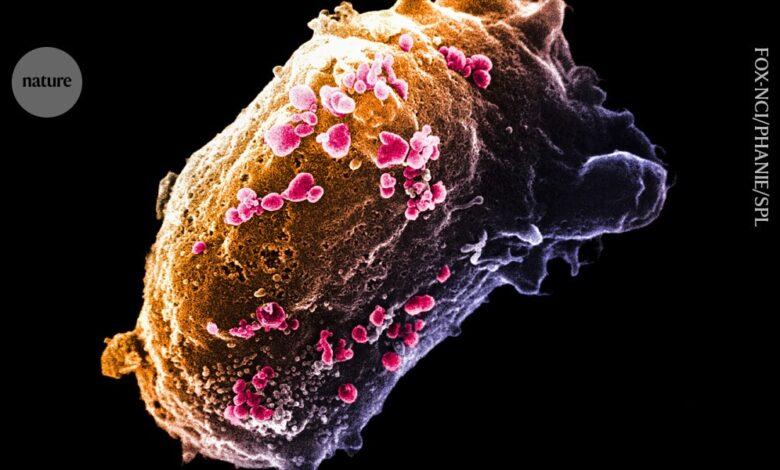
how close are we to a vaccine — or a cure?
At a major HIV conference in July, scientists announced that a seventh person had been ‘cured’ of the disease. A 60-year-old man in Germany, after receiving a stem-cell transplant, has been free of the virus for almost six years, researchers reported. Seventh patient ‘cured’ of HIV: why scientists are excited The first such instance of eliminating HIV from a person…
Read More » -
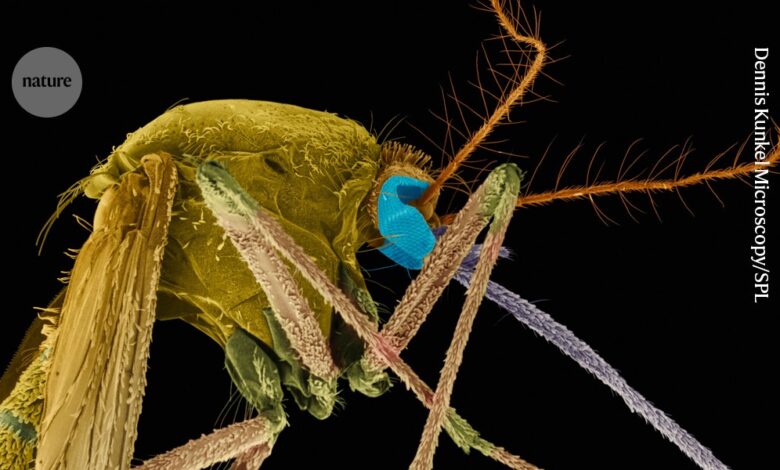
Mysterious Oropouche virus is spreading: what you should know
The Southern house mosquito (Culex quinquefasciatus; artificially coloured) can transmit Oropouche virus to humans, but the main vector is the midge Culicoides paraensis.Credit: Dennis Kunkel Microscopy/Science Photo Library Once confined to the Amazon region, the mysterious virus that causes the disease called Oropouche fever has been expanding its range since late 2023, spurring international concern. The virus has already caused…
Read More » -

Can floating homes make coastal communities resilient to climate risks?
Sea levels are changing rapidly and could rise by 1 metre or more by 2100 without drastic reductions in greenhouse-gas emissions1. Low-lying coastal areas — home to nearly one billion people — are at high risk of erosion and flooding2. In July, for example, torrential rain, coupled with high tides and worsening erosion, inundated coastal areas in Lagos, flooding around…
Read More » -

Winds of change: reshaping Tenerife’s energy economy
“When harvesting wind energy, keeping an eye on turbines is crucial, particularly on an island as windy and tropical as Tenerife. There’s a lot of humidity and salt from the sea, as well as sand from the Sahara Desert. These conditions test the turbines, which easily accumulate dirt or rust. This picture was taken in May at the headquarters of…
Read More » -

‘Fire clouds’ from super-hot wildfires are on the rise as Earth warms
A suspected arson on 24 July ignited the Park Fire in California, which had exploded to more than 140,000 hectares less than three days later.Credit: Josh Edelson/AFP/Getty The monstrous fires that are now charring vast areas of western North America aren’t just colossal and fast-moving, they have also created their own thunderstorms — an example of exotic fire behaviour that…
Read More » -
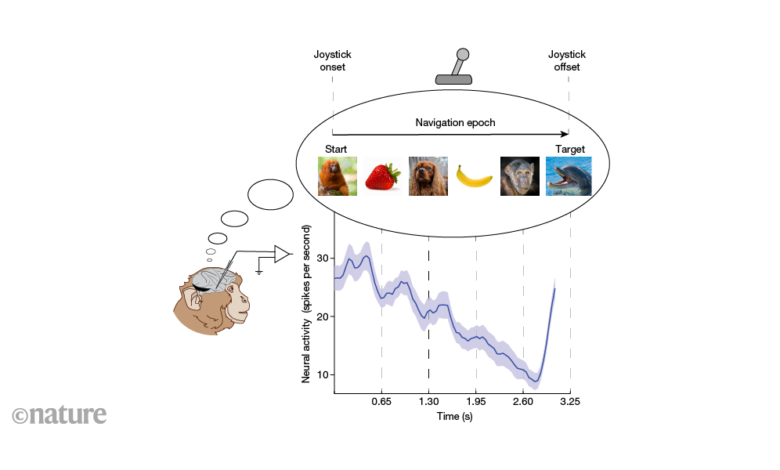
Mental maps help monkeys to navigate without sensory input
RESEARCH BRIEFINGS 29 July 2024 Cognitive maps are internal representations of the external environment. Evidence from monkeys shows that a cognitive map can support the mental navigation of an array of landmarks without sensory input. Source link
Read More » -

Could crabs be conscious, can you beat hypochondria and more: top reads for summer
Marginlands Arati Kumar-Rao Pan Macmillan (2023) Climate change will hit hardest the people living in the world’s most fragile landscapes. In Marginlands, photographer and environmentalist Arati Kumar-Rao takes readers on an unforgettable tour through breathtakingly beautiful regions in India, where the harmful effects of ill-planned infrastructure — designed only to accelerate economic growth — are being compounded by the climate…
Read More » -

Your reagent is past its use-by date. Should you bin it?
Even if their best-before dates have passed, some materials can still be used — and doing so is often a cost-conscious choice.Credit: Getty Everyone has at one time or another grabbed something out of the fridge or store cupboard, only to find that its use-by date is long past. It still looks good, and it smells OK. Should you throw…
Read More » -
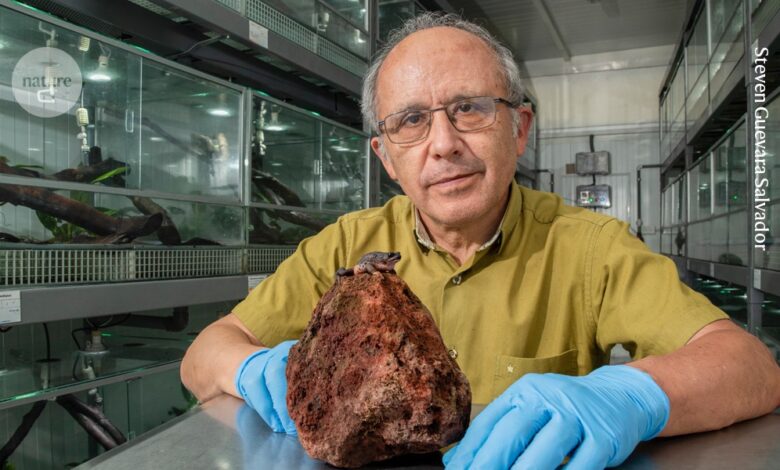
how endangered-species researchers find hope in the dark
Luis Coloma grew up in Guaranda, Ecuador, a small city in the Andes nestled in a high valley near the Chimborazo volcano. “It was a paradise,” he says. “When I was a kid, the frogs were so abundant it was impossible to ignore them.” Beyond seeing various species living together along the riverbanks, he was elated by their boisterous calls.…
Read More » -
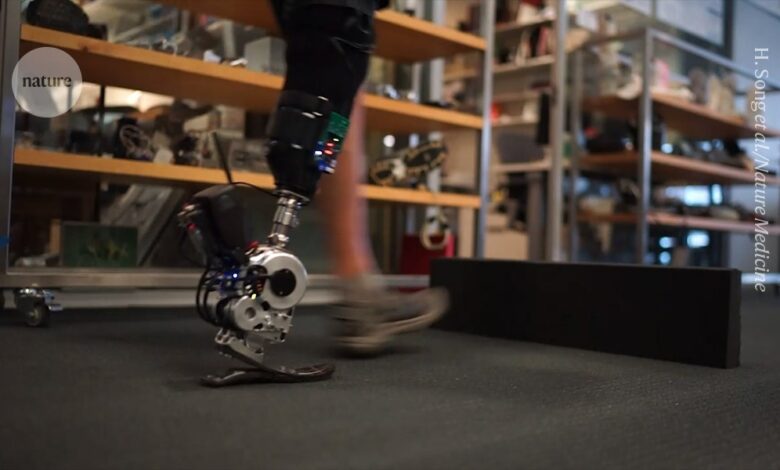
Bionic leg moves like a natural limb — without conscious thought
Trial participants with the robotic system could walk faster than those with standard robotic legs.Credit: H. Song et al./Nature Medicine A robotic leg that can be fully controlled by the brain and spinal cord has enabled seven people who had lost a lower leg to walk roughly as fast as people without amputations. The bionic limb uses a computer interface…
Read More »