
Science
-
The green solution to climate change isn’t happening – and that’s good
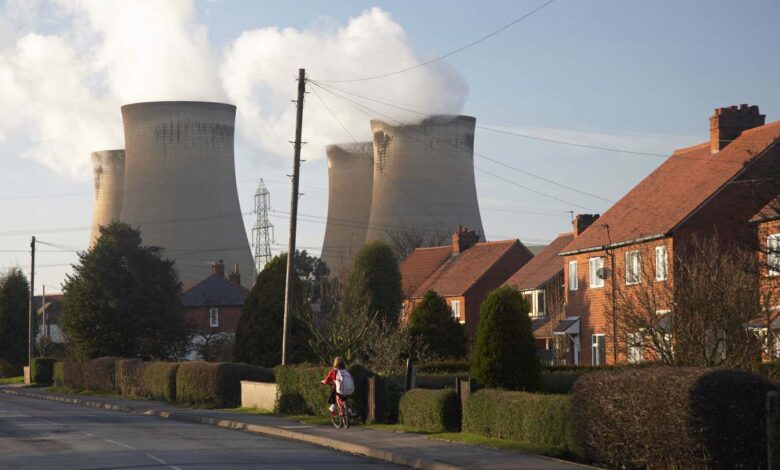
The Drax Power Station in the north of England Ian Lamond/Alamy You’ve probably seen those nice graphs showing carbon dioxide levels and temperatures falling towards the end of the century. How is this miracle meant to be achieved? The idea is that we harvest plants, burn them for energy and then capture and store the CO2. Voila, problem solved! Except…
Read More » -

Iodised salt has become uncool but many of us need to eat more iodine
Boring old iodised table salt should make a comeback Tatjana Baibakova/Alamy When I was at uni, I had a biology lecturer who was obsessed with iodine, and whose life’s work had been tackling global dietary deficiencies. He urged us to always use iodised salt, telling us it had raised the IQ of whole nations and was one of the greatest…
Read More » -

Food shock is inevitable due to the Iran war – and it could get bad
Food prices are expected to rise later this year dpa picture alliance/Alamy Global food prices hit their highest levels on record after the 1970s energy crisis, triggered by conflict in the Middle East, once inflation is corrected for. Could we be headed for a new record – the worst food shock ever – as fuel, fertiliser and pesticide prices skyrocket…
Read More » -

Genetic clues tell the story of Neanderthals’ decline
Reconstructions of a Neanderthal man and woman at the Neanderthal Museum in Mettmann, Germany AP Photo/Martin Meissner/Alamy An analysis of Neanderthal DNA has helped piece together the story of many millennia of hard times that finally led to the demise of our ancient human relatives. Faced with a cooling climate, their population shrank and they wound up confined to what…
Read More » -

Forget the multiverse. In the pluriverse, we create reality together
J R Eyerman/The LIFE Picture Collection/Shutterstock What is now? The nature of the ever-changing present moment has always fascinated me, because there is a paradox at its heart. From a personal perspective, the present is everything: it is the only time we can ever act or choose; the only thing we can ever experience or know. What did you have…
Read More » -
Why is black rain falling on Iran and how dangerous is it?
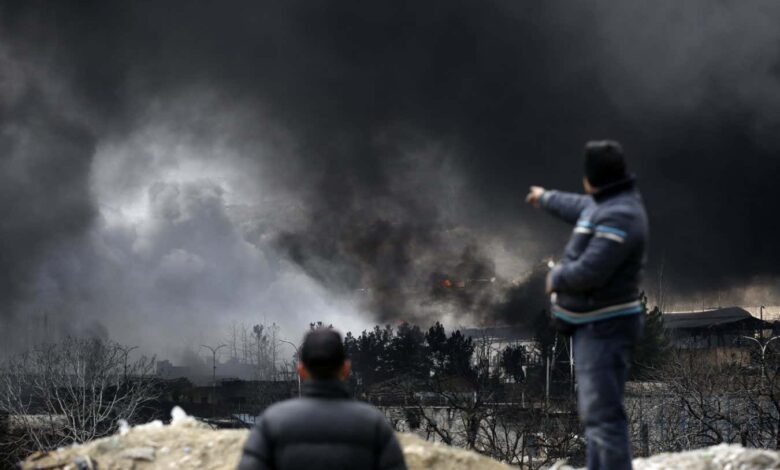
Black smoke rises after fires broke out following US-Israel attacks targeting oil storage facilities in Tehran, Iran, on 8 March Fatemeh Bahrami/Anadolu via Getty Images The skies in northern Iran were dark with smoke on 8 March as the US and Israeli bombing campaign against the country continued, and black rain even fell on the capital Tehran. The catastrophic scenes…
Read More » -

A crisis in cosmology may mean hidden dimensions really exist
DAVID PARKER/SCIENCE PHOTO LIBRARY Last year, cosmologists working on the Dark Energy Spectroscopic Instrument (DESI) reported hints that the mysterious dark energy thought to be driving the expansion of the universe may be weakening over time. If these startling findings prove correct, then dark energy cannot be a cosmological constant – a fixed term in our equations that represents the…
Read More » -
Stone Age symbols may push back the earliest form of writing
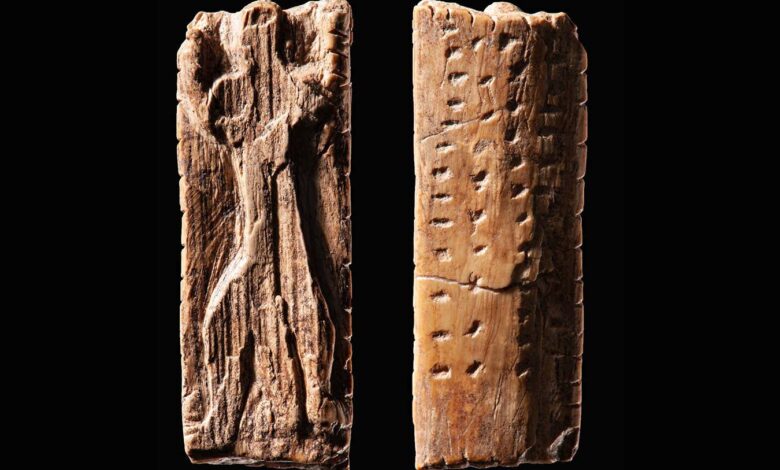
The Adorant figurine, approximately 38,000 years old, consists of a small, ivory plate bearing an anthropomorphic figure and multiple sequences of notches and dots Landesmuseum Württemberg / Hendrik Zwietasch, CC BY 4.0 Stone Age people 40,000 years ago used a simple form of writing comparable in complexity to the earliest stages of the world’s first writing system, cuneiform, according to…
Read More » -
The mystery of nuclear ‘magic numbers’ has finally been resolved
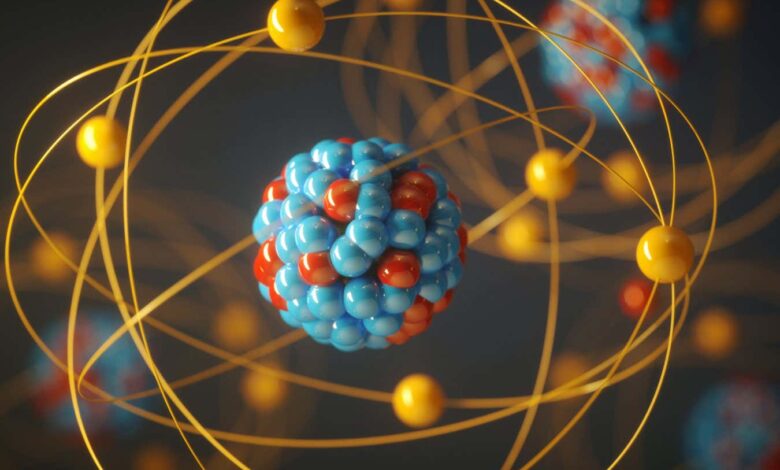
Some atoms seem to be particularly stable because of their numbers of protons and neutrons Shutterstock/ktsdesign A special set of numbers has formed the backbone of nuclear physics research for decades, and now we finally know how it arises from the quantum mix of nuclear particles and forces. Nearly 80 years ago, physicist Maria Goeppert Mayer showed that when the…
Read More » -
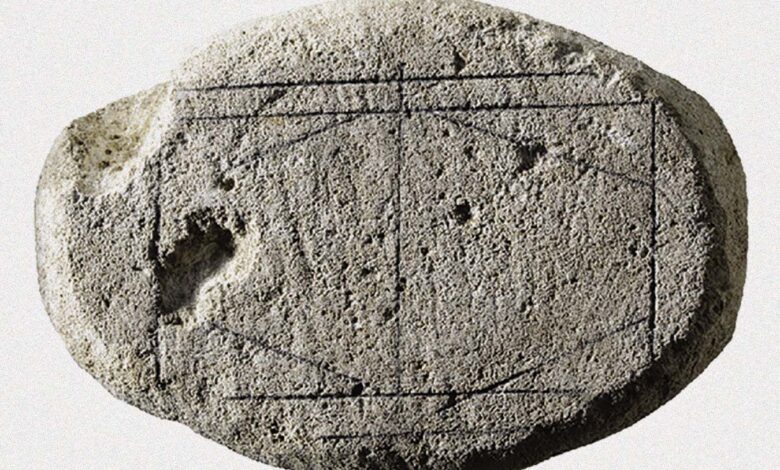
Is this carved rock an ancient Roman board game?
The possible game board with pencil marks highlighting the incised lines Het Romeins Museum A mysterious flat stone with a geometric pattern of straight lines carved into it may be a previously unknown Roman board game. Thousands of simulations by artificial intelligence of how sliding stone or glass pieces could have marked the surface suggest it was an early example…
Read More »