
Posted on: June 15, 2026, 10:01h.
Last updated on: June 16, 2026, 03:50h.

- Lake Mead is projected to plummet back to its record-low 1,040-foot elevation by July, with federal models predicting this will become the new normal
- Negotiations have flatlined between the seven states with Colorado River rights, despite federal intervention
- Las Vegas remains insulated from immediate catastrophe by using just 63% of its allocation through aggressive conservation, even as Lake Mead hits 29% capacity
Lake Mead is on track to revisit a grim milestone in about six weeks: its lowest elevation since the reservoir first filled in the 1930s. According to new federal modeling released Monday (June 15), that low point won’t be a brief dip, it will become the new normal.
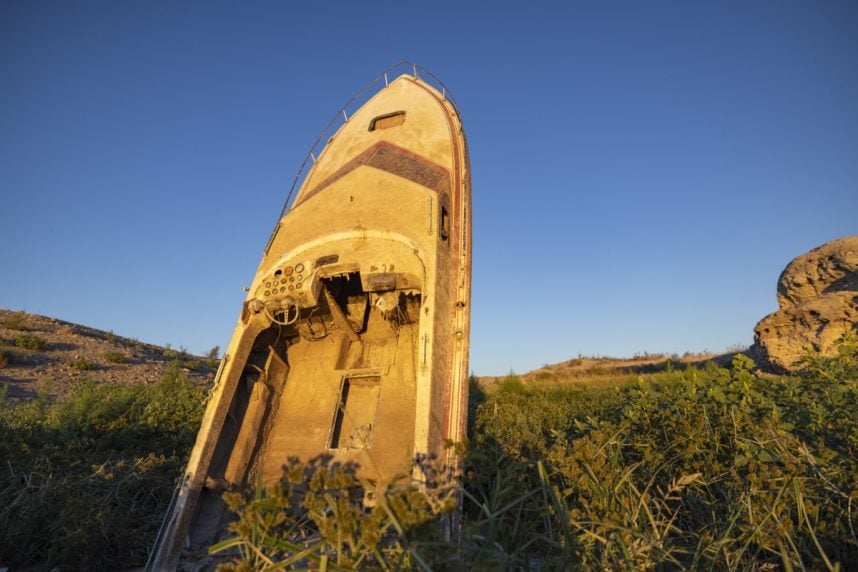
The U.S. Bureau of Reclamation (BOR)’s latest “most probable” forecast shows Lake Mead dropping back to 1,040 feet above sea level, matching its record low from July 2022 — but with no subsequent record-breaking wet winter expected that could bail the system out again.
After that, the reservoir is expected to remain below that threshold for most of the next two years. By next summer, the lake is projected to fall to roughly 1,015 feet, and by May 2028, to just under 1,012 feet.
Deepening Crisis
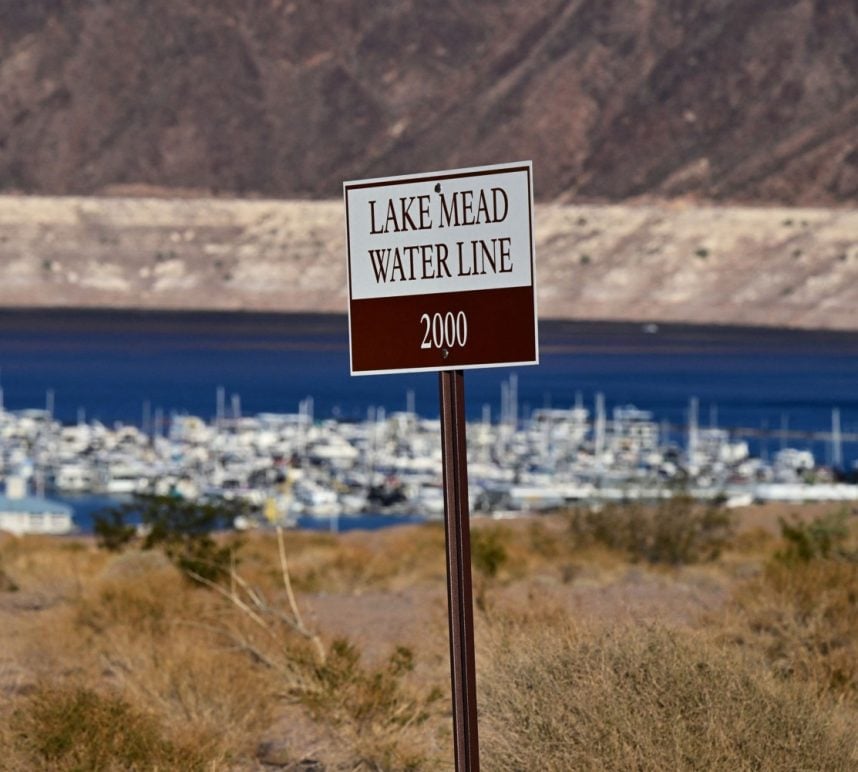
The projections underscore the deepening crisis on the Colorado River, the water source for roughly 40 million people across seven states — including Las Vegas’ 2.4 million residents and 40 million annual visitors. The system’s two major reservoirs continue to shrink: Lake Mead sits at 29% capacity, while Lake Powell is at 24%.
The BOR’s report notes that the federal government continues to retain water in Lake Powell, 281 miles upstream, to protect hydropower production at Glen Canyon Dam. The agency aims to keep Powell near 3,525 feet, a level considered necessary to maintain reliable power generation.
To help offset a severely weak snowpack in the Rockies — the river’s primary source — additional water is being released from Flaming Gorge Reservoir. Without that boost, Reclamation says June’s inflow to Lake Powell would be only 7% of normal, following May’s 18%.
Seven States, One River, Zero Agreement
The New York Times reported Monday (June 15) that the seven Colorado River Basin states — Nevada, Arizona, and California in the Lower Basin; Colorado, New Mexico, Utah, and Wyoming in the Upper Basin — are clashing over the federal government’s forthcoming long-term management plan, expected this summer.
Negotiations have flatlined after more than six months of meetings — despite repeated attempts by the Trump administration to jump‑start progress by bringing governors together for high‑level discussions.
After signing a deal earlier this month that could help Nevada reduce Southern California’s draw from Lake Mead by funding more desalination in San Diego, Scott Cameron, the BOR’s acting commissioner, seemed optimistic about the future.
However, a day later, he told a conference of water experts in Colorado: “I think we’ve succeeded in making everyone unhappy and maybe making everyone mad.”
Vegas Remains Above Water
Despite the possibility of a 40% cut to Nevada’s Colorado River allocation under some federal scenarios, the Southern Nevada Water Authority continues to frame the situation as manageable. Las Vegas has already demonstrated the ability to reduce consumption through conservation and reuse.
The BOR’s report estimates Nevada will use 0.188-million-acre feet of Colorado River water this year — about 63% of its full allocation. That figure does not include water used downstream of Hoover Dam.
The BOR’s modeling suggests 2027 may look more like 2024: not catastrophic, but far from recovery.
Source link