

In December 2019, Cassie Abel was having a moment. She was trying to run two small businesses and went into labor when her only employee, a part-timer, emailed saying she was taking a full-time job elsewhere.
Then COVID hit. Her mother was hospitalized in the first wave, and her dad had a heart attack and was airlifted to a nearby hospital.
Her parents slowly recovered. Abel’s businesses didn’t rebound as quickly.
Clients at her PR marketing and consulting firm were paralyzed, not sure when the world would open up. Her women’s outdoor apparel company, Wild Rye, was also facing uncertainty. “We had retailers emailing us, threatening that they were going to cancel major purchase orders because they didn’t know what the future held,” she says. But as people started escaping their homes and getting outside, they needed gear, and Wild Rye started to grow. Abel shuttered the consulting business and went all in. Now the Idaho-based CEO has 11 full-time employees and posted more than $4 million in sales last year, despite the impact of tariffs.
Hard work, vision, and grit all got her there. And a little help from someone else.
‘Negativity Is Noise’
In 2017, Tory Burch appeared in a sleek black-and-white ad campaign alongside Reese Witherspoon, Jamie Lee Curtis, Jon Hamm and Gwyneth Paltrow. They weren’t modeling her juggernaut fashion line, known for its “preppy boho” style, double-T logo, ballet flats and tunics. The campaign was titled #EmbraceAmbition.
It was a make-good of sorts. In an interview about her success, Burch was asked — “in a very rude way,” she now says — if she described herself as ambitious. Burch demurred. When the article came out, a friend gave quick feedback: “Great article, but you really can’t shy away from that word.”
“The minute she said that, something switched in me. Of course we collectively need to own our ambition,” Burch says. Hillary Clinton had just lost the presidential election. There were questions about how ambitious women should or could be. But Burch picked up the phone — and nearly everyone she called to join the campaign said yes.
When it came out, there were naysayers. “I’ve gotten so much flak, I mean, at every point in this company,” she says. “My parents have this expression that has served me well: Negativity is noise.”
Abel remembers the campaign. “I love that motto,” she says. “I grew up as an athlete. I was kind of a mega nerd at the same time. I felt like I got poked fun at because I was a try-hard and ambitious, and so that statement really resonated.”
It’s part of what inspired her to apply for the Tory Burch Foundation Fellows Program, which at the time provided $5,000 grant funding, networking and other support to female founders. In the midst of the pandemic, her family’s health crises and mounting business challenges, Abel had what she thought was another interview for the program. Then Burch came onscreen and told the group they had been selected as fellows.
“It was this moment of, all right, things are starting to turn around,” Abel says. “Like this is exactly what I need, when I need it.”
‘Carry On and Get It Done’
Burch started her fashion line in 2004, and in the two decades since the industry has changed dramatically. Social media, fast fashion, e-commerce, supply chain disruptions and the onslaught of AI have made it more challenging — even as cultural phenomena like “The Devil Wears Prada” made fashion more accessible and mainstream.
But fashion, for Burch, was always a bit of a trojan horse. “My business plan was to build a global lifestyle brand so that I could start a foundation,” she says. “I have no idea why I had such conviction around that idea, but I just instinctually did.”
She said so in pitch after pitch. One investor shut her down quickly, making clear that business and purpose did not go hand in hand. At the time, they didn’t — this was before Toms or Warby Parker promised charitable giving tied to every purchase. Burch held firm anyway. She launched her fashion line in 2004 and, five years later, the foundation.
In its early years, the foundation offered mentoring, coaching and low-interest small business loans. In 2015, it launched its fellowship program with just 10 entrepreneurs. This year there will be 120 fellows. The foundation has announced a goal to add $1 billion to the economy through women entrepreneurs by 2030. Total so far: $342 million.
The company Burch founded now carries an estimated value of $3.2 billion. She has been named to Forbes’ Most Powerful Women list six times. But she constantly wants to refocus on other founders. “We haven’t made enough progress,” she says — less than 2% of VC funding goes to women-led businesses, a number that is declining even as women-led companies deliver higher average rates of return. “We need to — what’s the phrase? — carry on and get it done.”
From Fashion to Empanadas
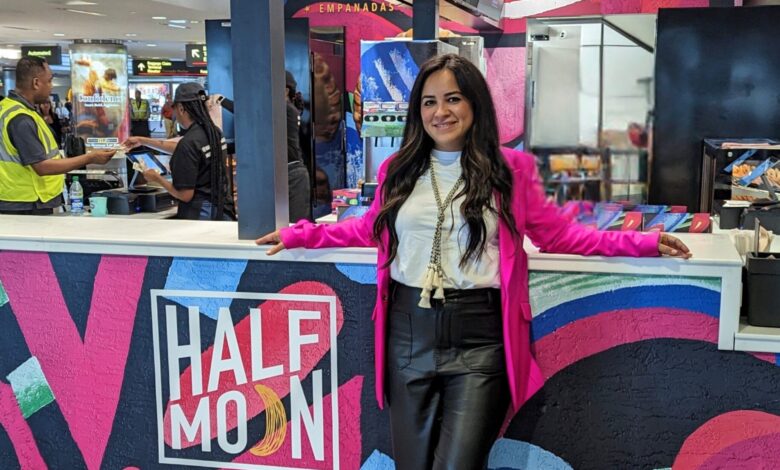
Pilar Guzmán is the founder and CEO of Half Moon Empanadas in Miami. Empanadas are all they make — one product, one brand, in airports. She became a fellow in 2021 when her company had $3 million in revenue but growth had stalled. “Very successful people would tell me, ‘It’s crazy to expand in airports, you’re crazy Pilar,’” she says. This year she’s opening four new locations, including at Boston Logan and JFK, has 200 employees (paid nearly $10 more per hour than the industry average) and is on track to hit $30 million in revenue.
Beau Wangtrakuldee founded the Philadelphia-based AmorSui after a chemical spill burned through the standard lab coat she wore at work. Two years ago, she needed a $25,000 loan after landing a $1 million contract with the VA. An interest-free foundation loan helped her fulfill it — and that led to a $5 million follow-on contract.
“Most ‘women’s empowerment’ positioning across the industry is a marketing smokescreen,” says Megan Mason, a branding strategist and founder of the Elle Collective. “Real economic impact requires comprehensive, intentional architecture.” The Tory Burch Foundation, she says, has “certainly” built that.
The fellowship targets early-stage businesses with at least $75,000 in annual revenue. The 12-month intensive includes a financials bootcamp, pitch deck design and help landing investor meetings. To date, 500 fellows average more than $2 million in annual revenue — nearly 30% higher than the average women-owned business, according to LendingTree data. Some 91% are still in business after five years, compared to the 50% national average from the U.S. Bureau of Labor Statistics.
“Tory is playing to her strengths; as an entrepreneur she knows what it takes,” says Jason Kelly, author of ‘The New Tycoons.’ “There’s a very powerful flywheel effect because she’s building an incredible network who have a vested interest in each other’s success — and that compounds.”
Only recently has Burch felt ready to be more open about how hard it all has been. “This has been a wonderful 20 years. It’s also been exhausting, challenging and at times brutal,” she says.
Six or seven years ago, she called the investor who once told her to never mix purpose and business. “I’d just been at the Forbes event, and I said, ‘You know what? They said purpose and business go hand in hand.’ And he said, ‘OK, what do you want?’ And I said, ‘A check for the foundation, naturally.’”
He sent the check that year, and every year since.
Reported by Wendy Naugle, USA TODAY.
Source link